Showing posts with label wine. Show all posts

Wednesday, November 18, 2009

Thanksgiving at Palate Press

Thanksgiving: Our Wine Holiday,by W. R. Tish


Thanks to the World Wide Web, America’s homegrown feasting holiday has become, all but officially, America’s Wine Holiday.

Read more at Palate Press: The online wine magazine.


Creative Commons License


This work is licensed under a
Creative Commons Attribution-Noncommercial-No Derivative Works 3.0 United States License.

Monday, November 9, 2009

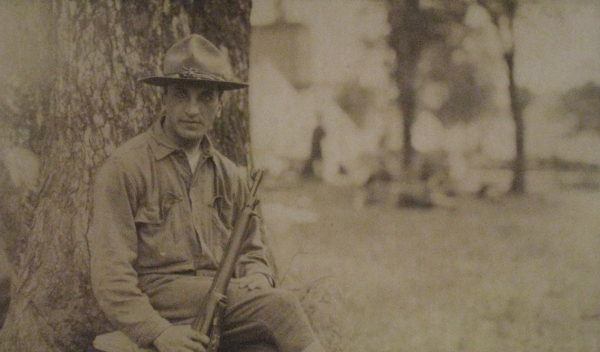
A Doughboy France: A Palate Press Veterans Day Tribute

Today's story, A Doughboy in France: A Palate Press Veterans Day Tribute, can be found at Palate Press. It includes seven wine reviews (well, six wine and a beer) and excerpts from my grandfather's World War I diary. I think you will enjoy it.


Creative Commons License


This work is licensed under a
Creative Commons Attribution-Noncommercial-No Derivative Works 3.0 United States License.

Tuesday, September 8, 2009

PALATE PRESS: The online wine magazine

I apologize for my absence from 2 Days per Bottle. I have been preparing to launch PALATE PRESS: The online wine magazine, and I am absolutely thrilled to announce that we launch Thursday, September 10, with an amazing lineup of stories. Here is a sneak preview of the press release, for my wonderful readers:


PALATE PRESS: The online wine magazine, the next step in the evolution of on-line wine content, is pleased to announce its launch on September 10, 2009. PALATE PRESS is the collaborative effort many of the best recognized wine voices on the internet, including American Wine Blog Award winners and twenty of the Top 100 Wine Blogs.

The Editor in Chief is W. R. Tish, known in the wine trade as simply "Tish." Tish was Editor of Wine Enthusiast Magazine for 10 years, and has been writing and speaking about wine and food--often with a comedic edge--for more than a decade since. Deb Harkness is PALATE PRESS' Wine Review Editor. A double award winner in the 2008 American Wine Blog Awards (best single-subject wine blog and best wine review blog), Deb, aka "Dr. Debs," has been seeking out and writing about Good Wine Under $20 for two years now. Two more of our Editors were American Wine Blog Award winners in 2009: Lenn Thompson for best single-subject wine blog (LENNDEVOURS) and Jeff Lefevere for best graphics (GOOD GRAPE: A Wine Blog Manifesto). And Art and Visuals Editor Hardy Wallace was recently in the news as the winner of the "Really Goode Job" created by Murphy-Goode Winery; Hardy runs a Top 100 wine blog at Dirty South Wine.

Other Editors and Contributors from the world's top 100 wine blogs include Gabriella Opaz (Catavino), Richard Auffrey (Passionate Foodie), Michelle Lentz (My Wine Education), Russ Beebe (Winehiker Witiculture), Joe Roberts (1 Wine Dude), Craig Camp (Wine Camp), Kori Voorhees (Wine Peeps), Andrew Barrow (Spittoon), Remy Charest (The Wine Case), "Sonadora" (Wannabe Wino), Ken Payton (Reign of Terroir), Tim Elliot (Wine Cast) and many more. Palate Press writers are based across the U.S., in Canada and around the world; they receive hundreds of thousands of wine-related hits every month and all of them will be contributing original content to the site. The entire staff list can be found here. Palate Press also welcomes submissions from wine writers around the internet and the world.

In terms of its position within the current wine-media scene, Editor in Chief W. R. Tish sees PALATE PRESS as a "blogazine," combining the passion of bloggers with the editorial appeal of a broad-based magazine. He adds that the capacity of readers to comment on articles adds a dynamic that makes Palate Press more like talk radio than like traditional print, and he promises: "We are not afraid of controversy. And we are not afraid to present multiple opinions on wine topics--something you rarely see in the Ivory Tower glossies. We think our approach to the wine zeitgeist will be more realistic, and in turn rewarding for readers. Palate Press is committed to covering wine intelligently, not churning out hundreds of sterile wine ratings in bloated buying guides."

Articles on PALATE PRESS will be presented via seven distinct departments, or "Pages": Feature Story; The Wine Life; Spotlight; Hot Potato; + Food; Soap Box; and, starting in October, Wine Reviews. Stories slated for the first month include a soul-searching profile of Bonny Doon's Randall Grahm; an exposé of shady shelf talkers; a surprising look at wine-label regulations; an Eisch vs. Riedel wine-glass smackdown; critical essays on how wine-evaluation systems by major U.S. critics miss the mark; a firsthand look at how the economy has impacted wine-country tourism; and in-depth articles on under-appreciated wines from Alsace to Portugal to Walla Walla.


David Honig, creator and Publisher, describes PALATE PRESS as "a logical next generation" of wine media. The hypothesis is simple: collecting the very best of the wine blogosphere and carefully editing and publishing it will create a top-quality and commercially viable online wine magazine. The experiment is well under way, preparing to launch with some of the most talented and best-known wine writers on the internet. "Clearly the expertise is out there. Bloggers communicate with authority and authenticity, demonstrating particular areas of expertise," Honig notes. "Wherever there is a wine story, there is a qualified wine blogger to write about it." And it's not just bloggers on board: Palate Press contributors include winemakers, retailers, sommeliers and professional wine writers.

If you have any questions or comments about PALATE PRESS: The online wine magazine, contact the Publisher, David Honig, by email, Twitter, or call him at (317) xxx-xxxx. Send advertising inquiries to Advertising and submissions to Submissions.

Wednesday, March 25, 2009

A Tour of The Wooden Guys' cellar

The Big Wooden Guy and The Little Wooden Guy thought you might like to see their wine cellar. I needed to increase the humidity a little, so I made the fountain out of some empty wine bottles. That is what you hear if you turn up the sound. Wave back at the Wooden Guys.


Creative Commons License


This work is licensed under a
Creative Commons Attribution-Noncommercial-No Derivative Works 3.0 United States License.

Monday, March 23, 2009

2005 Yangarra Estate Grenache Old Vine

Type Red
Producer Yangarra Estate
Variety Grenache
Designation Old Vine
Country Australia
Region South Australia
SubRegion Fleurieu
Appellation McLaren Vale
Price $25.98


The Big Wooden Guy is not pleased. You don't turn Grenache into Aussie fruit-bomb Shiraz, even if you are from down under. How the heck did this get a 90+ rating?

Night One

The nose opens with some jammy dark fruit, mostly elderberry, with black pepper, earth and brambles. It also has an underlying lingering licorice aroma.

The palate is very true to the nose. The wine opens with jammy dark elderberry and black pepper. It has earth and brambles, giving it underlying depth and keeping it from qualifying as a "fruit bomb." Licorice is more pronounced on the palate than the nose. A bit of dried orange peel appears on the mid-palate. The finish is mid-length and trends away from the fruit and toward black pepper and orange peel.

Night Two

The nose is less complex than on Night One, opening with black fruit and black pepper, and not much else.

The palate, too, is less complex. It is mostly jammy fruit bomb sprinkled with some black pepper. A bit of coffee makes a quick appearance, and equally quick disappearance, on the mid-palate, then the finish reverts to big fruit plus vanilla. Tannins are slightly grainy.

This wine got great reviews from the commercial magazines, 90+. I don't get it. This is Grenache turned into Aussie Shiraz fruit bomb.


Creative Commons License


This work is licensed under a
Creative Commons Attribution-Noncommercial-No Derivative Works 3.0 United States License.

Friday, March 20, 2009

2005 Viñedos y Bodegas Pablo Garnacha Cariñena Menguante

Type Red
Producer Viñedos y Bodegas Pablo
Variety Garnacha
Designation Menguante
Country Spain
Region Aragón
Appellation Cariñena
Price $8.99


This is under $10. Amazing.

Night One

This has a powerful nose, full of blackberry, mulberry, and orange peel.

The palate is extraordinarily complex for an under $10 wine. It starts with blackberries and pepper, then adds orange peel, intense spices and licorice. The wine is medium-bodied and tannins are smooth, adding leather to the finish. The finish is long.

This is absurdly good for an under $10 wine. Is it great? No, not really. Is it great on a price to quality ratio? Heck yeah. Come back on Night Two to see it it stands up.

Night Two

The nose is not as nice on Night Two, opening with sweet blackberries and the aroma of artificial grape soda. It still has a little of the orange peel from Night One. There is also a touch of tarragon.

The palate has also dropped off quite a bit from Night One. First, rather than smooth, it is gritty. Pepper is stronger than blackberry, but the taste of artificial fruit flavors, followed by a mid-palate with the clear metallic taste of garlic, is a real disappointment. The finish is all garlic and the aftertaste of artificial sweetener.

I adored this wine, for the dollar, on Night One. On Night Two, I am not even going to finish the bottle. In all fairness, though, this is an under-$10 wine, so it was made to drink fresh, not to rest in a cellar for years. For what it is, cheap wine meant to be drunk right away, it is terrific. Just make sure you have enough thirst, or enough friends, to put it all away the first night.


Creative Commons License


This work is licensed under a
Creative Commons Attribution-Noncommercial-No Derivative Works 3.0 United States License.

Saturday, January 3, 2009

2006 Mosby Sangiovese

Type- Red
Producer- Mosby
Variety- Sangiovese
Country- USA
Region- California
SubRegion- North Coast
Appellation- Mendocino County
Price- $10.99


The Little Wooden Guy is disappointed. Very disappointed.

Night One

The color is brickish dull red and cloudy. The nose is pleasant, mostly cherries plus a touch of raspberry and some pepper. On the palate, though, it falls apart. The first impression is of heat, blatant alcohol. The flavors are much sharper, the cherries turning sour, the raspberries turning to unsweetened cranberries (try them some time- they are incredibly tart to the point of being bitter). Acid and fruit and tannins are an unbalanced mish-mash, fighting with each other rather than complementing each other or working together. It might come together on Night Two. Stick around and we will find out together.

Night Two

Cherries in alcohol make the nose for Night Two. There is also some pepper, and a hint of toasted pecans. Again, sour cherries and cranberries, though some vanilla is starting to make itself known. This is just out of balance and not particularly pleasant.

Sunday, November 30, 2008

Why I write negative reviews

There is just a bit of a brouhaha in the wining blogosphere about negative reviews. Some people write them, some don't. Should you? Yes. You should.

Why do people write wine review blogs? That is an interesting question, and it needs to broken down a bit.

First, why do people wine blog? There are as many reasons as there are bloggers, but they all come down to pretty much the same thing. They love wine, and today you blog what you love. It makes you feel a little closer, it gets you more involved, it makes you part of a community with the same interest, and it allows you to share your love with others. Of course, some people blog as part of a business, wineries, retailers, marketers, etc., but even they are doing something they love and joining a community of others that feel the same way.

Second, why do wine bloggers write wine review blogs? That's a slightly different story. There are lots of wine blogs out there that are not wine review blogs. Fermentation: The Daily Wine Blog does not review wine at all. It blogs the wine business, and particularly the conflict between wine lovers and wine distributors (along with lots of other interesting things). The Wine Connoisseur blogs the news about wine. Dr. Vino does some reviews, but blogs the wine industry in depth as well. Then there are the straight review blogs. Good Wine Under $20 focuses on wines at a reasonable price. Wannabe Wino reviews what she drinks, often from winery trips. There are so many out there I can't do justice to them all. What they all have in common, though, is that they love wine, and they share that love with you, the reader.

That is what we do for ourselves. What do we do for the reader? We provide, I hope, a service. When I look at statistics from my own site I find that more than half my views come from wine searches. People type "Villa Maria" or "Rockaway" into the little Google box, looking for reviews. What do they find? If they come to my blog, they find positive AND negative reviews. If they go to other blogs they might only find positive ones. Are we doing those consumers a service if we do not warn them away from garbage? In my opinion, no. So why do some people only write positive reviews? Good question. Let's ask them.

From the tremendous and well-respected Vinography, Is there any point to negative wine reviews?

1. There was so much mediocre wine out there in the world that lukewarm or negative reviews could easily take up the majority of my writing time.

2. Writing negative reviews is about as fun as completing the writing comprehension section of the SAT.

3. People mostly want to know which wines are great much more than they want to know which wines to avoid.

and

a. Many times, I don't necessarily know that the bottle I happen to be reviewing isn't simply just a bit off -- whether from a fault that I am not detecting or identifying or simply due to bottle variation of some sort or another.

b. A bad review is quite damaging, because it is often read as a condemnation of the winery itself (despite any care or attention put to the contrary by the author) even though the particular wine in question could be part of a portfolio of truly stellar wines.

c. Likewise, bad reviews are often read (and written by irresponsible critics) as being absolute and categorical judgements about a winery, when in fact they are mere evaluations of a specific wine in a specific vintage. That particular wine could have been great the year before, or it could get great the next year. But bad reviews hang around in the minds of consumers like skeletons in the closet, much longer than they should.

d. Bad reviews also hang around in the minds of winemakers and winery owners a lot longer than they should. Like it or not, anyone who seriously attempts to write consistently about wine in a critical fashion has a symbiotic (or as Jancis Robinson would put it, a parasitic) relationship with the wine industry. Bad reviews burn bridges in ways that make it difficult for the writer to ply their craft.


Are these good reasons? In my own opinion, not at all. I am not alone, either. The very first person to comment in response asked:

What if you substituted "a good review" in the points above (a,b,c, and d)-does your logic also follow through (in the opposite direction) on these wineries?


Yup.

Now let's break that down a bit more, okay?

1. There was so much mediocre wine out there in the world that lukewarm or negative reviews could easily take up the majority of my writing time.


Really? Do you really drink that much bad wine? Why? I expect most bloggers are fairly discriminating about what they purchase. Do I get bad wine? Absolutely. But is it the norm? Nope. I generally don't buy something awful, and since I promise to write good AND bad reviews, people don't often send less than their best efforts.

2. Writing negative reviews is about as fun as completing the writing comprehension section of the SAT.


I respectfully disagree. In fact, I don't think I ever had more fun writing a review than when I channeled Dr. Suess and wrote a haiku for Deerfield Merlot Cuvee.

3. People mostly want to know which wines are great much more than they want to know which wines to avoid.


Upon what do you base this conclusion? I look at my statistics and find that people search bad wine as often as they search good wine.

a. Many times, I don't necessarily know that the bottle I happen to be reviewing isn't simply just a bit off -- whether from a fault that I am not detecting or identifying or simply due to bottle variation of some sort or another.


While this is true, it is equally true that the next sucker could end up with a bottle just as bad. Also, there is a huge difference between "this might be a bit flawed" or "it ain't great" and "oh man is this awful overworked over-alcoholed manufactured oak powdered crap."

b. A bad review is quite damaging, because it is often read as a condemnation of the winery itself (despite any care or attention put to the contrary by the author) even though the particular wine in question could be part of a portfolio of truly stellar wines.


Is a good review praising a winery itself, even if they have bad stuff in their portfolio? Also, isn't this best handled by the review? You don't just write "good" or "bad." You write a review, right?

c. Likewise, bad reviews are often read (and written by irresponsible critics) as being absolute and categorical judgements about a winery, when in fact they are mere evaluations of a specific wine in a specific vintage. That particular wine could have been great the year before, or it could get great the next year. But bad reviews hang around in the minds of consumers like skeletons in the closet, much longer than they should.


See (b), supra.

d. Bad reviews also hang around in the minds of winemakers and winery owners a lot longer than they should. Like it or not, anyone who seriously attempts to write consistently about wine in a critical fashion has a symbiotic (or as Jancis Robinson would put it, a parasitic) relationship with the wine industry. Bad reviews burn bridges in ways that make it difficult for the writer to ply their craft.


This is, by far, the worst reason not to write bad reviews. If you fear the wineries' reaction, then you are being bullied into the very parisitic relationship described by Robinson. If you accept that, even applaud it, then you have a credibility problem. Worse, if enough people do the same, then your credibility problem bleeds into the entire wine-writing blogosphere.

Other very well-known and well-respected wine bloggers also write only positive reviews, like Another Wine Blog:

Anyway, when a wine is reviewed on this site it is because we enjoyed it and we want to share that information with our readers. It is that simple. It does not make one bit of difference if a friend gave it to us as a gift, or if it came from one of our wine clubs, if it came from the grocery store, or if a wine industry person sent it to be reviewed, the review will be positive and it will be honest. Does anyone really want to hear about the Franzia that was served at some reception? Or the crap bottle the local wine megastore lackey conned me into buying because he is an idiot and ordered too much of it? I may write about the megastore or the lackey, but who cares about the bad wine? Besides, someone might like that wine. My palate is not omniscient, despite a drunken boast or two I may have made to the contrary.


Hey, wait a minute. I already know about the Franzia, but I sure want to know about the crap bottle before my own local wine megastore lackey cons me into buying the same thing. As for your palate, well, doesn't the same conversation go the same way for wine you like? Also, it is not just a matter your palate, unless all you write is "good" or "bad." If, on the other hand, you explain WHY you didn't like it- over-extracted, too hot, too sweet, out of character for the grape, etc., then people can judge for themselves whether to follow your recommendation.

Stop thinking about "wine review" for a minute and think about "review." A movie, two tickets, sodas and snacks, costs a fair chunk of change these days. Do you read movie reviews before you go? I do. Not just that, but I consider a poor review a favor. It is not just the reviewer's conclusion that matters, but the content as well. If a movie reviewer writes "this was not a good movie because it was poorly edited, jumped from unconnected scene to unconnected scene, and substituted gore and violence for a coherent story," I am going to take a pass. On the other hand, if it says "this was not a good movie because it had far too much gratuitous starlet nudity, but otherwise held together well," well, I'm going. Twice. See how that works? As wine writers, we WRITE, not merely opine.

Movies give us another more concrete lesson, too. Do you remember David Manning? He was a fictitious film critic created by Sony to create poster quotes. Sony ended up paying out $1.5M in settlement for that fraud. I am not equating positive-review-only bloggers with "David Manning." I do suggest, however, that positive-review-only blogs will hurt our credibility. People will start to wonder "is this another David Manning?"

Look again at your statistics. If a potential consumer Googles "Chateau Perfection" they will find it. But what if they Google "Chateau Plonque"? You know it's crap. You know it's Sahara meets Gigli, yet you leave them to discover that on their own.

Now add one more factor, free wine. Is there an added responsibility to write negative reviews if you are getting free samples? Or is that just cutting off your hand to spite your face, a guaranteed path to making the UPS guy a stranger, to a life of having to buy all your own wine? The answer, to me, is both. Yes, you risk missing out on freebies if the winemakers have a more "friendly" set of bloggers they can count on to laud the good stuff and bury the bad. At that point, though, you are a free PR arm of the winery. You might not be "David Manning," but are you getting too close? Are you at least Larry King, notorious as the softest interview in politics, instead of being Meet the Press?

What is the bottom line to all this? The blogosphere is still new, and the wine blogosphere newer still. We are still feeling out our place in the world. In my own very personal opinion, writing only positive reviews might score you a few more free bottles, but your free bottles might cost my credibility. It might also do a disservice to the next consumer with the bad luck to run into that wine megastore lackey.

One commenter in a related thread observed that my reasoning means I have to review every sample I receive. He's right. I do. See my wine review policy at the top of the right hand colum. I don't do it on anybody's schedule, but I do it. Do you?

Friday, November 28, 2008

Thanksgiving Round-Up

N.V. Mumm Napa Pinot Noir Blanc de Noirs

Type- Rosé - Sparkling
Producer- Mumm Napa
Variety- Pinot Noir
Designation- Blanc de Noirs
Country- USA
Region- California
SubRegion- Napa Valley
Appellation- Napa Valley
Price- $15.99


My family has one of the best Thanksgiving traditions ever. Mimosa! I needed something bubbly to add to the OJ, and this was the cheapest bottle in the cellar. It was actually too good for mimosa, but you've got to do what you've got to do.

The color was a pale salmon pink, tinting slightly toward orange. It had a steady stream of small bubbles. There was a lot of fruit on the nose, strawberry, banana, and a hint, a tiny hint, of lemon zest. Minerality, not fruit, drove the attack, plus a little bit of lime. Some banana and white grapefruit appeared on the mid-palate, with mineral and lemon juice on the finish. It was tart, bright, acidic and clean.

2005 Redline Pinot Noir Cedar Lane Vineyard

Type- Red
Producer- Redline
Variety- Pinot Noir
Vineyard- Cedar Lane Vineyard
Country- USA
Region- California
SubRegion- Central Coast
Appellation- Arroyo Seco
From- WineQ
Price- $19.99


This wine went pretty quickly and I did not get much in the way of notes. It went well with the meal. in general, it was pretty good. it had a bit of earth and some depth, something I look for to distinguish a drinkable under-$30 pinot from its more common cherry-cola-and-black-tea brethren. I will definitely revisit this, so stay tuned.

2006 Georges Dubœuf Pouilly-Fuissé

Type- White
Producer- Georges Dubœuf
Variety- Chardonnay
Country- France
Region- Burgundy
SubRegion- Mâconnais
Appellation- Pouilly-Fuissé


Night One
Soft tropical fruit led the nose of this wine, banana, pineapple, along with a bit of light toast. On the palate it was thick and oily, tasting of banana, pineapple, and green apple. White pepper appeared on the mid-palate. It had a long, slightly dusty finish.

Night Two

The nose the next day was softer and a little spicier, more like banana bread than bananas, plus pineapple and a bit of nutmeg. The palate was much more citrusy than the nose, with spice and acidity. Lemon, lime, and gingersnaps, softened on the mid-palate to expose underlying pineapple. The finish was short, dropping suddenly.

2005 Villa Maria Sauvignon Blanc Clifford Bay Reserve

Type- White
Producer- Villa Maria
Variety- Sauvignon Blanc
Designation- Clifford Bay Reserve
Country- New Zealand
Region- South Island
SubRegion- Marlborough
Appellation- Marlborough


Night One

What the heck is that smell? This one got passed around the table and everybody said the same thing, "wait a minute, I know it, ...wait a minute, ... no, I can't place it." Then I broke out the good glass and it was obvious. Asparagus. There was also some ginger snap and vanilla custard. There were also ginger snaps and vanilla custard on the palate, moving to lemon meringue on the mid-palate. Underlying all of it was the green taste of asparagus. It was also surprisingly fat for a Sauv. Blanc, particularly from New Zealand.

Night Two

The asparagus smell was much stronger, overpowering any fruit. It smelled like asparagus and slightly rancid butter. On the palate, well, it was just a disaster. Imagine, if you must, boiling asparagus in pineapple juice until it all dissolves. Strain it and drink it. Or don't. I'm sure not drinking any more of this crap.

2001 Dow Porto Late Bottled Vintage

Type- Red - Fortified
Producer- Dow
Variety- Port Blend
Designation- Late Bottled Vintage
Country- Portugal
Region- Douro
Appellation Porto


The nose wasn't giving up a lot, but if you worked at it you could get some licorice. The palate was just loaded with raisins and prunes, plus a bit of blueberry syrup. The finish simply collapsed.

Chocolate Stout and Raspberry Lambic Float


You will never want a root beer float again. Float some vanilla ice cream in 2 parts chocolate stout to 1 part raspberry lambic. Once a little of the ice cream melts, taking away a bit of the beer bite and adding creaminess, well, it is a grown-up ice cream float. Everybody who tries it is always stunned. I would not hesitate to serve this as a fun finish to an upscale barbecue on a hot summer's day.

Thanksgiving


The Wooden Guys are still recovering. We will all report back details later.

Tuesday, November 25, 2008

The Wooden Guys on Thanksgiving wine

Here is their two-step process for picking out that perfect Thanksgiving wine. Ready? Make sure you have a pen and some paper to write all this down. Okay, here goes.

Step One- DRINK WHAT YOU LIKE AND STOP MAKING SUCH A BIG DEAL ABOUT IT!!! FOR PETE'S SAKE, IT'S SUPPOSED TO BE FUN!!!


Step Two- DON'T DRINK WHAT YOU DON'T LIKE. WHAT ARE YOU, A MORON?!


Thursday, September 18, 2008

Goodbye Bush- I'll drink to that

What will you open on January 20, 2009? How will you celebrate the end of the Bush Era? I asked that question of wine bloggers around the world. What will you drink, and why? The answers are terrific, and recommendations and reviews are worth a look.

People picked French wines, a poke in the eye to the "Old Europe" and "Freedom Fries" kerfuffle. One particularly brilliant wag chose Chateau Maison Blanche, leaving me to shake my head and say "I wish I'd thought of that." Some people are looking only forward and hoping for sweet success, while others will take a moment to look back in contemplation and rememberance. One blogger went for a wine that mirrored Bush's Presidency ("Despite shining promises, this wine disappoints in the end."), while another picks a "mystery in a bottle," because that is really what any new President really is.

Answers came in from across America and around the world. It is a terrific round-up and I can't offer enough thanks to everybody who participated.

Cheers! Salud! L'Chaim! Prost! All I know for sure is that I am really looking forward to raising a glass to the end of the Bush Era.

Pour Favor looks forward, not back, recommending Moscato d’ Asti, because "it delivers only sweet success!"

The Wine Camp Blog will be drinking 1970 Graham's Vintage Port, looking backward and taking a "moment to remember the thousands of Americans and hundreds of thousands of Iraqis that the Bush era has wiped from the face of the earth in our names."

One Wine Dude will be drinking Chateau Frank's Brut Champagne and being "thankful that Bush stayed in good health, so that Cheney never had a chance to try to ruin, er, I mean run the country."

Dr. Debs, at Good Wine under $20, will open a bottle of 2005 Great Whatsit Stolpman Vineyards Syrah, a wine she describes as "a mystery in a bottle," appropriate for inauguration because "every election day we're left opening Pandora's Box and facing the great unkown."

Strumerika will be drinking "The Old Man’s Blend” 2006 Groote Post from South Africa. Why? "Despite shining promises, this wine disappoints in the end. Sound familiar to you?"

Eating Leeds brings us a point of view from the other side of the Atlantic Ocean, and goes to the other side of the world for a bottle of wine, De Bortoli's Willowglen Shiraz 2006. The wine was grown during one of Australia's worst droughts on record. "The issue where not only the American people but the population of the world have been let down is the environment," and this wine is a good reminder of the future we face, together.

At McDuff's Food and Wine Trail is going for the true maverick, not John McCain, with “Pleiades X Old Vines,” Sean Thackrey NV. It's good, he says, very good. "History, I expect, shall not be so kind to Mr. Bush."

2005 Feather, Long Shadow’s Winery is the choice at Through the Walla Walla Grapevine. If the election goes one way, she will be tickled pink. If it goes the other way, "because the silkiness and rich mouth feel of this particular cabernet reminds me of a favorite blanket - - my security blanket that I will need to hold onto for the next four years."

At The Inquiring Vine picked two, Shotfire Shiraz and Anton Bauer Gruner Veltliner. Why? Because "once upon a time George had a little trouble telling the difference between Australia and Austria." Well done, wine and a movie.

The Cork Dork will drink The Pommery Cuvée Louise 1989, "the best Champagne I have had in the last year," if Obama wins. If McCain wins, it will be 1792 Ridgemont Reserve Barrel Select Kentucky Bourbon. "A lot of it."

Pour More plays it a little coy, saying "if my candidate wins," without naming names. But I think you can get a little hint from the wine, Pol Roger Champagne, and the why, "thinking back on the absurd “boycott” on all things French that the Bush administration encouraged, I figured at the very least I can stick some bubbles in their eye."

Wine Case hits it out of the park with a "why didn't I think of that" selection, Château Maison Blanche, or, "Chateau White House." Really, how obvious was that? It is named for "the building and institution that, thankfully, symbolizes so much more than just the current president."

Lenndevours picked Swedish Hill Winery's 2007 Vidal Blanc. Why? "It's in a blue bottle and I live in a blue state. I tend to vote with my fellow New Yorkers too."

Anything Wine chose 2003 Pride Cabernet Sauvignon for a darned good reason- "because even though I have not been remotely happy the past two elections, I have pride in the process that as a citizen, I have the right and duty to participate in."

My Wine Info went with a French wine because the French "were one of the few countries stand up the US when it counted." The wine? Domaine du Jas Le Chevre d'Or

Luscious Lushes like Perrier-Jouët NV Brut if Obama wins. But if "McLame & Caribou Barbie win this freak show, I will be drowning my sorrows in [Glenmorangie Sherry Cask] as I drive up to the border to escape."

Gonzo Gastronomy picked a great one, Twisted Oak *%#&@!. Yes, that is the name of the wine. "The reason for choosing this wine to celebrate the end of the Bush/Cheney nightmare is because over the last eight years I have used the word Twisted Oak symbolized more than I have my entire life!"

And let me not leave out a direct Twitter from martastrickland of Recenlty Consumed, who picked Oregon A-Z rose, saying "will miss A-Z, but certainly not W."

And finally, my own pick at 2 Days per Bottle was N.V. Pierre Peters Champagne Blanc de Blancs Brut Cuvée de Réserve. It's French. It's from a small single grower, not a corporation or negociant. And I bought it from a small independent wine store in Tribeca. Yup. Everything George W. Bush could possibly hate. Of course, if McCain wins, "I might be looking for a Merlot-Hemlock blend."

Domaine 547, a wine store as well as a blog, plays it safe. Depending upon the results, they will be opening a bottle of Godmé Blanc de Noirs Champagne to celebrate, or a bottle of Whisky to drown our sorrows. Follow the link, though, and I think you can guess the preference.

Sunday, July 27, 2008

Domaine de l'Oratoire St Martin Côtes du Rhône Villages Cairanne Réserve des Seigneurs 2004


Cotes du Rhone Villages
France
14% alcohol
$26.99

The little wooden guy is pleased to make a new friend.

The nose opens with definite minerality, red fruit cooled on a bed of cold crushed rocks. The fruit smells are light, cranberry and strawberry, the flowers and tobacco. It is a little closed immediately after opening.

"Oh my that's interesting!" That was my immediate thought when I tasted this wine. First, it was absolutely nothing like the nose. Strawberries and cola, licorice and tobacco, all meet on the attack. Mid-palate is dark cherries, pastry and vanilla, then it ends with sea salt and olives. This is really interesting. Tannins are clearly present but not drying, and fine. Finish is very long, and the after-taste continues to evolve just like the wine in your mouth.

Two hours later- The nose is still fairly closed, giving up mostly strawberry and mineral. If I smelled it blind I would guess pinot noir. Tannins are far more dominant now. Strawberries and cola are there, but more concentrated, darker, and black pepper has joined the band. Tobacco is more dominant on the midpalate and the licorice has entirely disappeared, with black pepper flowing throughout the wine's narrative. The end, also, is more tannic, a taste of strong black tea washing over the olives. I was wondering after the first try whether this would be too flabby, lacking in tannins, to last for any length of time. Now, though, a tannic backbone is not just making an appearance, but dominating. It should really be interesting to see what it does on night two.

Two more hours later- Now, for the first time, this smells like a southern Rhone wine. It has that barnyard bouquet I have come to expect, along with smoked meat, pepper and dark fruits. Dark fruit, pepper, orange peel, and meat make a mouth-filling palate. The tannins are smoother, silkier, but still firmly making themselves known, providing a strong foundation. Tobacco shows up on the midpalate, and the finish is still long.

NIGHT TWO

Barnyard, licorice, and meat open the nose, but it quickly settles down into sweet caramel, vanilla and flowers. The nose is entirely different than NIGHT ONE. Blackberries and blackcurrants, then smoked meat and tobacco, finishing with firm tannins and unsweetened cranberries. The finish lingers, with a memory of cranberry and tobacco.

This is a very interesting wine, rapidly evolving and showing terrific complexity and depth, particularly for the price point, $27.

Friday, July 25, 2008

Norton Reserva Malbec 2004


Lujan de Cayo
Mendoza
Argentina

The little wooden guy shrugs- not great, not bad, and a pretty good price. What's not to like?

From the bottle notes:

Bodega Norton was founded in 1895 at the highest point of the Mendoza River Valley. The estate winery is located in the foothills of the Andes, at altitudes ranging begtwen 850 and 1100 meters above sea level.

"Reserva" is made from carefully selected grapes from vineyards more than 30 years old. The wine is aged 12 months in rench oak barels and then additionally in botles before release.

Our people's passion, together with the harmonious coexistence of fruit and wood over time, have made this a great wine, characterized by elegance and complexity.


The nose of this wine is very powerful, baking bread, black plums and meat, then espresso and cocoa.

Chocolate covered cherries open the palate, folowed by leather and sour cherries. Mouth feel is a little thin, tannins are dusty, and it just feels a bit out of balance. Fruit is not overpowering. Tanins are not overpowering. Alcohol is not overpowering. Nothing stands out as too much or too little, so I have a hard time saying exactly what does not work, but it feels like a jigsaw puzzle that makes a nice picture, but none of the pieces quite fit together. On the other hand, this is an $8 bottle of wine, and at that price point getting a nice picture is a frickin' miracle.

SECOND NIGHT

Vanilla, blackberries and cocoa open the nose, which is far lighter than the night before. The wine is warmer than the night before, because I did not store it in the cellar overnight. That may also explain why it was so much hotter, the alcohol making its presence far more obtrusive.

Vanilla and blueberry pie with pepper open the palate. There is a midpalate to this $9 wine, which adds cocoa and leather. Tannins are a bit dusty. The finish is suprisingly long but turns sour at the very end.

This is not a great wine, but it is a great bargain. It is better balanced than the first night. It is also a very good example of a reasoanbly priced malbec. If you have tried it, or you want to introduce a friend to the grape, this is a good way to go.

Thursday, July 24, 2008

Raymond Cabernet Sauvignon Reserve 2005


Napa Valley, California
14.4% alcohol

From the bottle notes:

Raymond Napa Valley Reserve wines reflect a family dedication to excelllence and five generations of Napa Valley winemaking. Viticulture and winemaking experience, along with premium fruit from vineyards selected for climate and soil type, are combined to produce consistently superb wines.


Did you notice upon what the little wooden guy was standing? Yeah, this is pretty obviously cabernet, with the classic blackcurrant signature.


FIRST NIGHT

The nose opens with blackcurrant jelly, a lot of blackcurrant jelly, plus a bit of plum. After a few minutes some cigar box and a hint of mint come through the fruit.

The initial attack was black fruit and sour unripe plums. Alcohol was a little hot, the wine a little thinner than expected, medium rather than full bodied. The tannins were puckeringly dry. Finish was medium length.

Based on the sharpness and the super-dry tannins, I expect big changes from day one to day two.

SECOND NIGHT

What a difference a day makes.

The nose was still blackcurrant jelly, but now the sharpness and heat were down and some vanilla made an appearance. Secondary smells followed, cedar and lavendar, and even here for a sceond and gone again roses. Nobody would smell this and think anything other than "Napa Cab."

The firs tastes in this were, you guessed it, blackcurrant jelly, but instead of being joined by unripe plums like on night one, black cherries were the dance partner. Vanilla didn't actually cut in, just danced gently in the background, and vanilla and rose waltzed onto the floor for the second verse of the song. Tannins were soft and smooth. Wine was dry, but not puckering. Instead they just made a firm backbone, offering promise of cellar growth. Throughout night two the wine softened, getting a better more full-bodied mouth feel.

CONCLUSION

This was a good, not great but good, classic Napa Cab, all blackcurrants and vanilla. Raymond Vineyards avoided the temptation to over-oak this under-$30 wine, something I truly appreciate. Based upon the two day tasting, I think it will improve for a few years. Nobody will ever mistake it for a First Growth Bordeaux, but they will also not guess it came from the middle shelf at the grocery store. If you ever hold a wine tasting for your wine-neophyte friends, a "let me show you what a typical cabernet should be" sort of event, thiswould be a great candidate.

Sunday, July 20, 2008

Yalumba Shiraz & Viognier 2004

Barossa, South Australia
95% Shiraz, 5% Viognier

This is a blend I usually like, but this one was too sweet. The second night showed big improvement, but still not something I would run out and buy again.

FIRST NIGHT

The first aromas out of the glass were brown sugar and maple. Several minutes later some red berries showed up and, curiously, a bit of cucumber. The palate started with black fruit and plum skins, then the brown sugar and vanilla took over in an overly-sweet midpalate. The finish was short and too much like a Sweet Tart for my personal tastes.

SECOND NIGHT

The nose was better balanced on night two, showing cherry and vanilla, but not overpoweringly sweet. Strawberry and black cherry were up front on the palate, vanilla and pepper joined on the midpalate. That was the first hint of spice, or balance. The finish was mid-length with obvious alcohol. It was far better than the first night, so if you have some of this hang on to it for a while or decant it. But, unless you like big sweet vanilla fruit, don't run out now to get your wine store's last bottle.